
Seamless Connectivity, Everyday Elegance
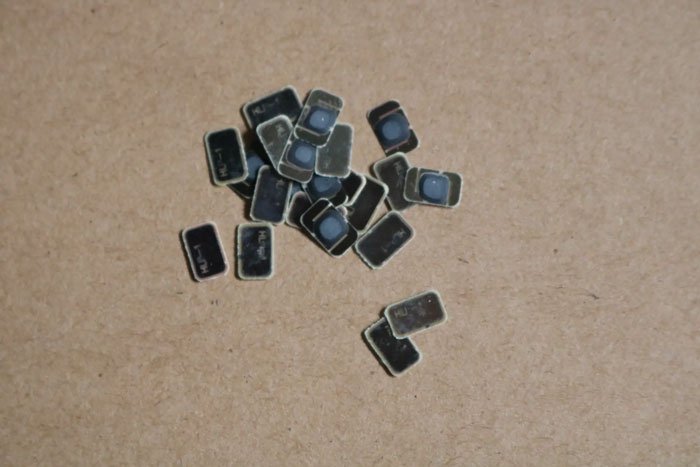
The RFID jewelry field covers a chip product matrix of IC (high frequency), ID (low frequency), and UHF (ultra-high frequency), such as: NT213、NT215、NT216、NT424、Mifare S50、Mifare S70、Ultralight EV1、Ultralight C、ICODE SLIX、CUID、T5577、TK4100、EM4200、Tesla Wait; Adapt to various scenarios, meet diverse and personalized needs, and provide solid and reliable hardware support for the industry.
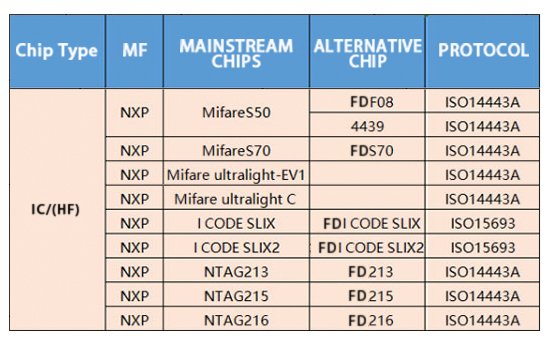
Adopting inductive coupling technology, supporting medium to short distance communication (0-10 centimeters), with mature multi tag anti-collision mechanism, multiple tags can be read simultaneously. Significantly increased storage capacity (128 bits to 8KB), integrated encryption coprocessor, and support for advanced security protocols such as AES encryption. Strong protocol compatibility, supporting ISO/IEC 14443A/B (for contact IC cards) and ISO/IEC 15693 (for contactless tags), RFID technology is derived from this frequency band.
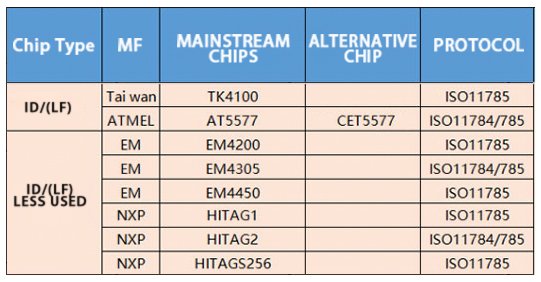
Transmitting energy and data through inductive coupling requires close contact with the reader/writer (<10 centimeters), and the signal has strong ability to penetrate metals and liquids. The storage capacity is small (usually less than 512 bits), the read and write speed is slow, and it does not support simultaneous reading of multiple tags (without anti-collision mechanism).
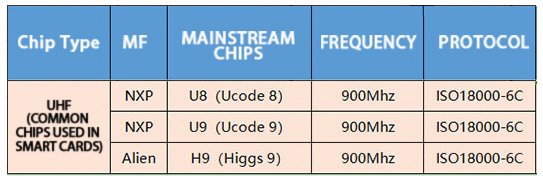
Using electromagnetic wave transmission, the reading distance is far (up to 10 meters or more), and it supports batch fast reading of hundreds of tags per second. The signal is susceptible to metal and liquid interference and requires special packaging (such as ceramic substrates for anti metal labels and flexible labels that can be attached to curved surfaces). There are various protocols, including EPC Gen2 and ISO/IEC 18000-6C, supporting global frequency band adaptation (such as 920-925MHz in China and 902-928MHz in the United States).
